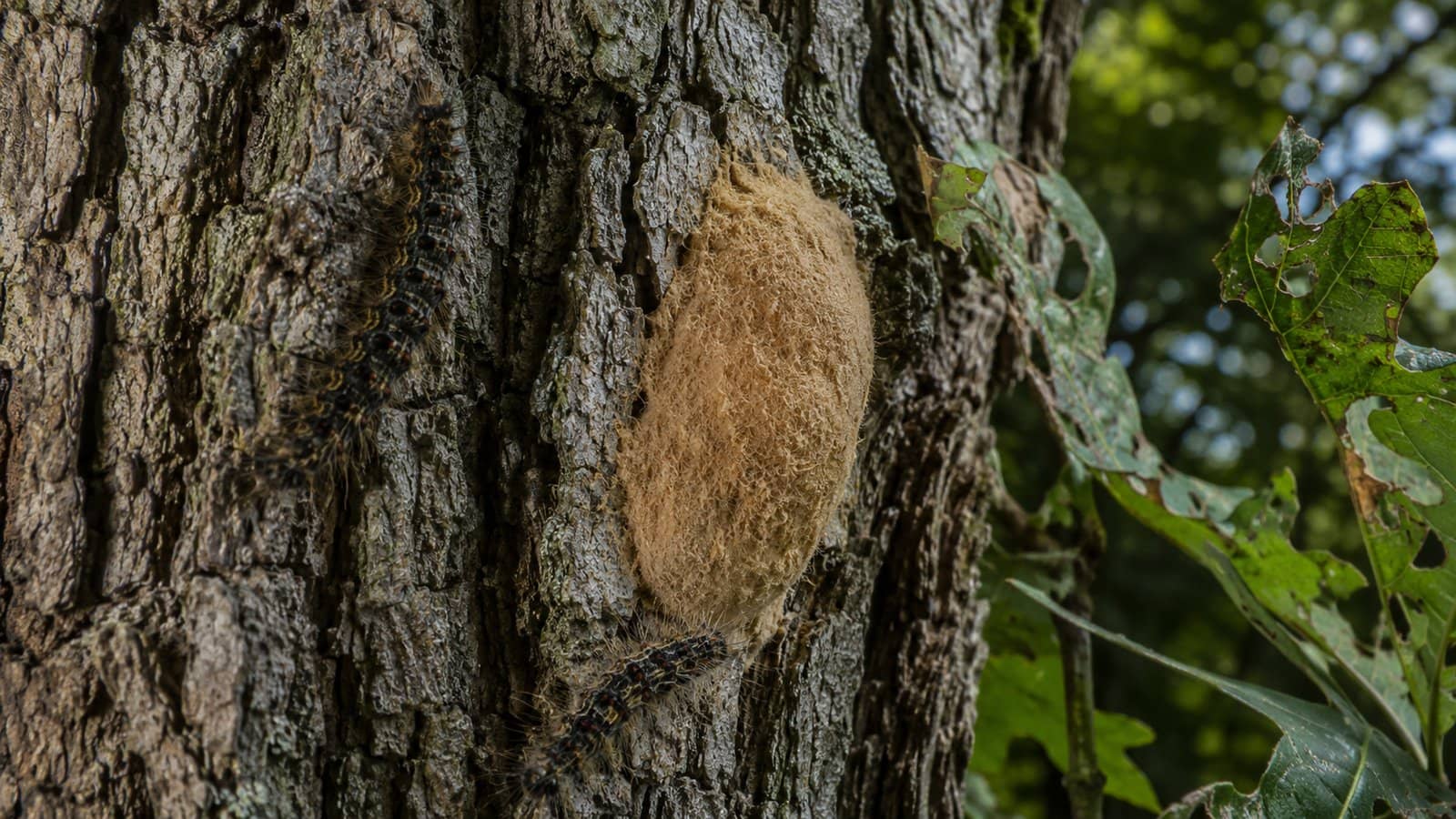
What spongy moth does to trees
Spongy moth caterpillars feed on the leaves of more than 300 species of deciduous and evergreen trees. Oaks are a favorite host, but birch, aspen, willow, crabapple, and many other trees can be affected. During outbreak years, caterpillars can strip large portions of a canopy.
The Wisconsin DNR notes that healthy trees and shrubs are likely to survive defoliation, but repeated defoliation over multiple years or defoliation combined with drought, root stress, or other problems can weaken trees. Caterpillar hairs can also irritate skin for some people, and heavy populations are a major nuisance around homes. (Source: Wisconsin DNR.)
Why western Wisconsin should pay attention
Spongy moth has been established longer in eastern Wisconsin and continues to be managed carefully as it expands. Western Wisconsin counties may see monitoring, trapping, reporting requests, or treatment efforts depending on current detections. Quarantine maps can change, so homeowners should check the Wisconsin Spongy Moth Resource Center or DATCP for the current county status before moving regulated items.
For a homeowner, the practical rule is simple: do not move firewood. Firewood can carry spongy moth, emerald ash borer, oak wilt, and other pests farther than they would travel on their own. Buy it where you burn it.
How to recognize spongy moth
Egg masses are tan, fuzzy patches often found on tree trunks, branches, firewood, fences, outdoor furniture, campers, and buildings. They can appear from late summer through spring and may hold hundreds of eggs.
Caterpillars hatch in spring and feed heavily as they grow. Older caterpillars have pairs of colored spots along the back, with blue spots toward the front and red spots toward the rear. In June and July, homeowners may see caterpillars resting on trunks, siding, and outdoor objects during the day.
What you can do at home
From late summer through spring, scrape egg masses into a container of soapy water and let them soak. Do not just knock them onto the ground. In spring and early summer, burlap bands or collection bands can help gather caterpillars on trunks so they can be removed.
For high-value trees during an outbreak, treatment may be appropriate, but timing matters. Sprays are most effective when caterpillars are small, and large shade trees require equipment that can reach and cover the canopy properly. The DNR lists homeowner management options including egg mass oils, bands, physically destroying life stages, insecticidal soaps, and insecticide applications for high-value trees or stands.
Tree health still matters
A vigorous tree is more likely to recover from one season of chewing. Mulch properly, water during dry spells, avoid root damage, and reduce other stresses where you can. If a tree is already declining, spongy moth defoliation can push it further downhill.
After a heavy defoliation year, watch for refoliation, canopy thinning, branch dieback, and secondary pests. A plant health care visit can help separate temporary leaf loss from a tree that is genuinely declining.
Talk to a local arborist
Seeing caterpillars, egg masses, or repeated defoliation around your property? Contact Wellner Arboriculture or call (715) 313-0550.