There is no honest one-size-fits-all price
Two trees can be the same height and have completely different removal costs. One may stand in an open yard where it can be felled safely. The other may be over a roof, wedged between fences, close to service wires, and too brittle to climb. Those are different jobs, even if both trees are 50 feet tall.
That is why an on-site estimate is the only number worth trusting. Photos can help start the conversation, but they do not always show lean, trunk condition, access, slope, nearby targets, or how much rigging the job will require.
The biggest cost factors
Size and diameter. Height matters, but trunk diameter and canopy spread matter too. A large hardwood with heavy limbs takes more time, more cuts, and more handling than a smaller soft-wooded tree.
Access. A backyard tree behind a narrow gate, steep hill, septic area, or landscaped bed may take longer than a tree near a driveway. Equipment access can make a major difference in efficiency and cleanup.
Targets. Trees near houses, garages, decks, fences, sheds, service lines, roads, and gardens often have to be dismantled in sections. Roping pieces down safely is slower than dropping wood into an open landing zone.
Tree condition. Dead, storm-damaged, cracked, or brittle trees can be more dangerous to climb and cut. Emerald ash borer-killed ash is a good example because dead ash can become unstable quickly.
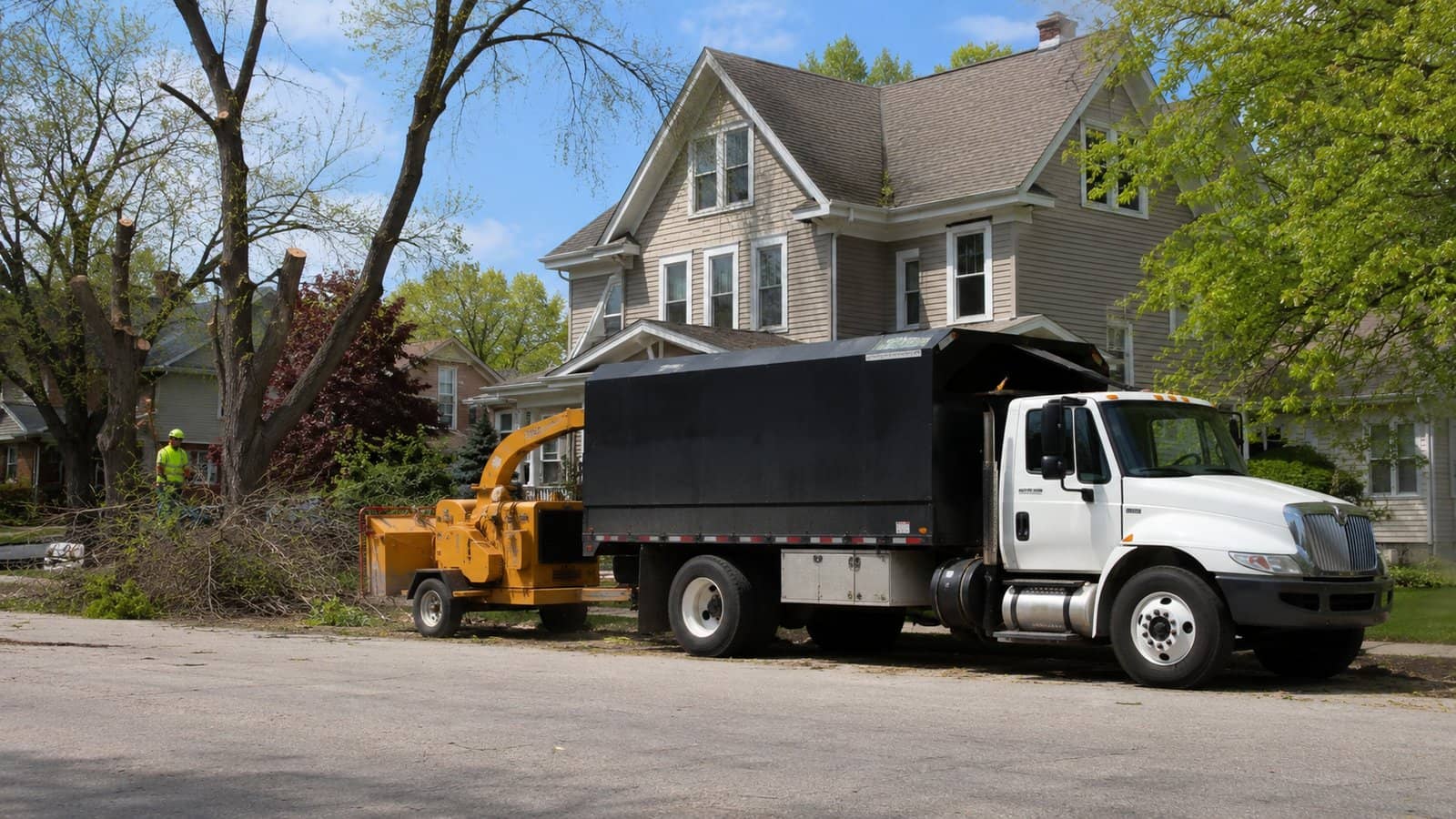
Cleanup expectations. Some homeowners want all wood and brush hauled away. Others want logs left for firewood or chips left for mulch. The cleanup plan affects time, hauling, and disposal.
What about small, medium, and large tree ranges?
Online cost guides often group removals into small, medium, and large trees, and those ranges can be useful for rough budgeting. In real life, a simple small removal may be only a few hundred dollars, while a large or complicated removal can cost much more. Emergency work, difficult access, and high-risk rigging push costs higher.
The problem with online calculators is that they cannot see the job. They do not know whether the tree is hollow, whether the yard is soft, whether there are overhead wires, or whether the wood can be safely lowered without damaging property. A careful estimate protects both the homeowner and the crew.
Is stump grinding included?
Usually, stump grinding is priced separately from tree removal because it uses different equipment and can be done at a different time. If you want the stump gone, ask for it in the estimate so the full project is clear from the start.
Grinding depth, surface roots, rocks, metal, fence lines, and utility markings can all affect the stump portion of the job. If you plan to replant in the same spot, say so, because that can change how the stump area should be handled.
Why the cheapest quote can cost more later
A low price is not automatically a bad price, but it should still include a clear scope. Who handles brush? Are logs hauled away or left? Is stump grinding included? How will nearby property be protected? What happens if the tree cannot be safely dropped whole?
Good tree work is about controlling risk. The right crew, equipment, and plan matter most when the tree is large, dead, storm-damaged, or close to something valuable.
Talk to a local arborist
Wellner Arboriculture provides free estimates for tree removal across Eau Claire, Boyd, Chippewa Falls, and the surrounding Chippewa Valley. Request an estimate or call (715) 313-0550.