Do not judge by the calendar alone
Wisconsin springs can be uneven. One tree may leaf out while another of a different species still looks bare. Silver maples, willows, and some ornamentals wake early. Oaks, walnuts, and a few other trees often take their time. A bare tree in May is not automatically a dead tree.
Before deciding on removal, look for signs of life in several parts of the tree. One dead branch does not mean the whole tree is dead, and one green twig does not mean the whole tree is safe.
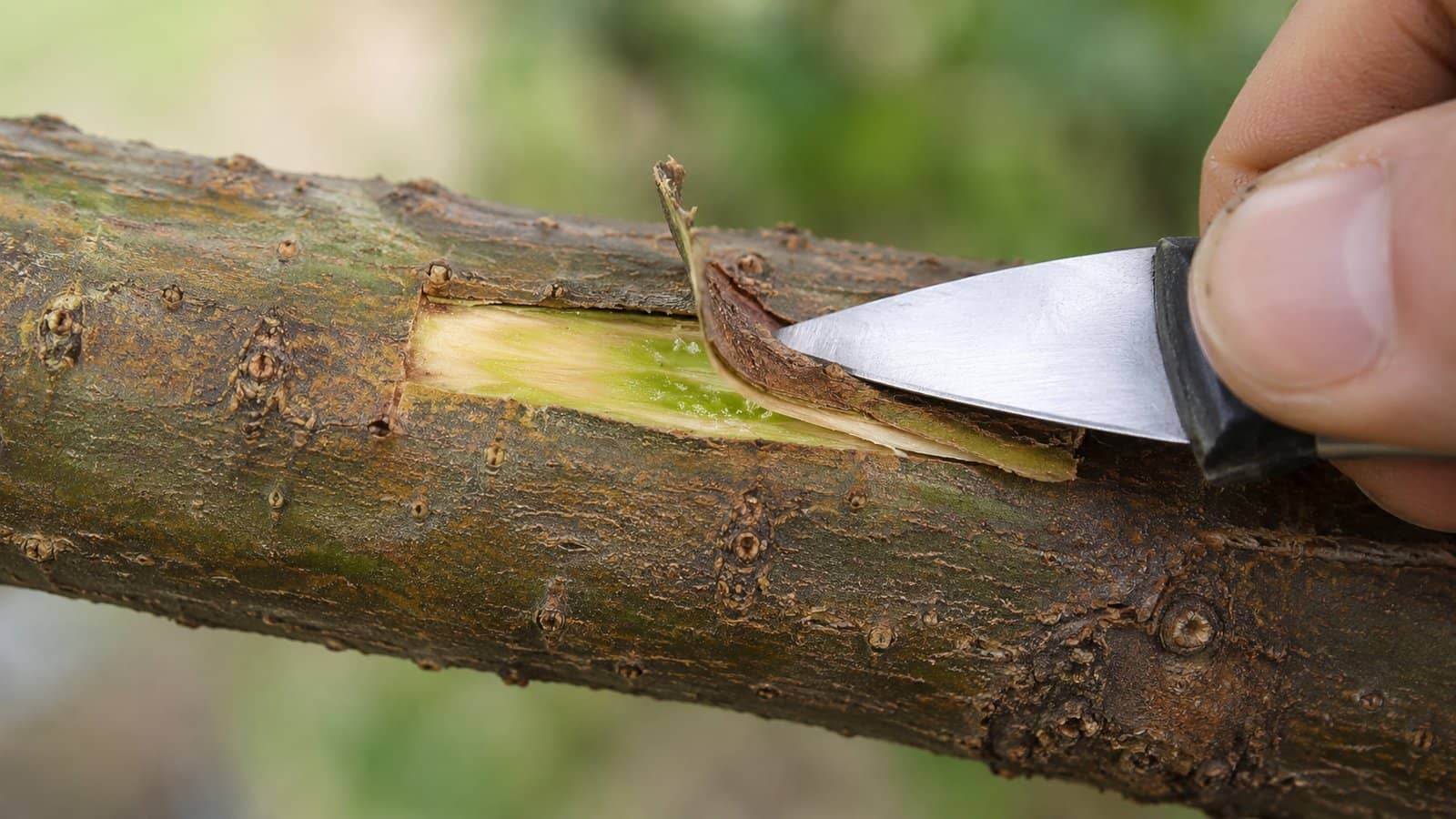
1. The scratch test
Use a fingernail or small knife to gently scratch the surface of a young twig. Just under the bark, living tissue is usually green or moist. Dead tissue is brown, dry, and brittle. Test more than one branch, including branches on different sides of the canopy.
If the tips are dead but lower branches or the trunk still show green, the tree may be partially alive and worth assessing. If every tested branch is brown and dry, the outlook is much worse.
2. Check the buds
Healthy buds are usually firm and attached. They may be small, but they have weight and shape. Dead buds are dry, shriveled, and easy to crumble or knock off. On many trees, buds are set the previous season, so they are present before leaves open.
Look across the whole tree. A branch with plump buds may still leaf out, while a branch with no viable buds may be dead even if the trunk is alive.
3. Bend small twigs
A living twig usually bends before it breaks because it still contains moisture. A dead twig often snaps sharply with little resistance. This test works best on pencil-thin twigs, not large limbs.
As with the scratch test, check several spots. Winter injury can kill exposed tips while lower or protected parts remain alive.
4. Look at bark and trunk condition
Loose bark, deep cracks, fungal growth, cavities, insect galleries, and large areas of missing bark can all point to serious decline. Some bark shedding is normal for certain species, so pattern matters. A large area where bark has fallen away and the wood underneath is dry is more concerning than normal exfoliating bark on a healthy tree.
Also look for sprouts growing from the base or trunk. Sprouting can mean the tree is trying to survive after upper canopy stress. It is a sign to investigate, not a guarantee the tree is fine.
5. Check the roots and base
A dead or dying tree often shows trouble at the base: mushrooms, soft wood, sawdust, root damage, soil heaving, or cracks near the trunk. If the tree is leaning more than before or the ground has lifted on one side, treat it as a safety concern even if some branches are still green.
When to wait and when to act
If the tree is small, away from targets, and only slow to leaf out, waiting a few extra weeks is reasonable. If the tree is dead above a house, driveway, sidewalk, service line, or play area, do not wait for it to become more brittle.
A dead tree does not improve with time. Removal is usually safer before decay advances, especially for ash killed by emerald ash borer or storm-damaged trees with cracks and broken tops.
Talk to a local arborist
If you are not sure whether a tree is dead, dormant, or declining, Wellner Arboriculture can take a look before you make the call. Contact us or call (715) 313-0550.