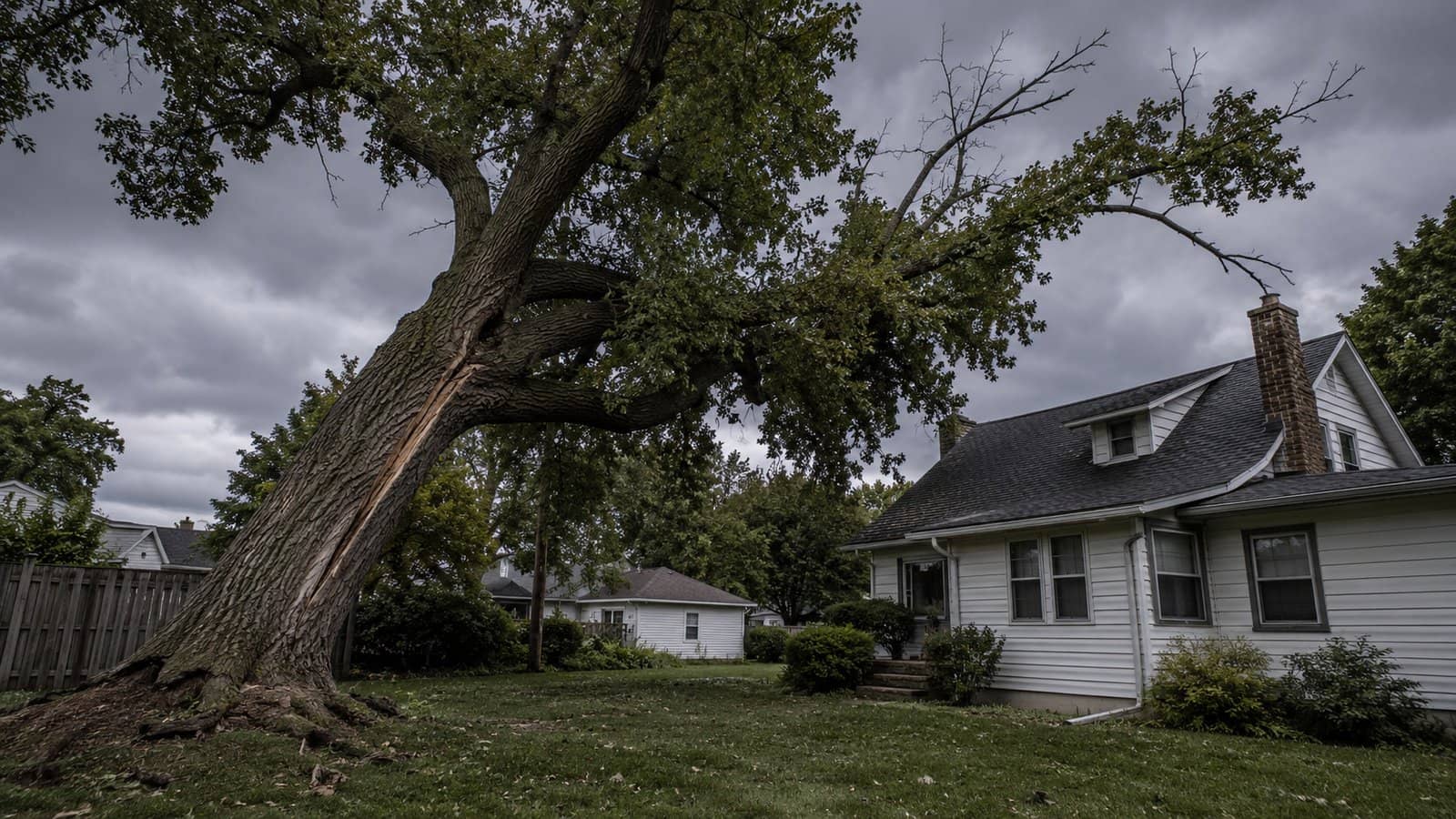
Tree risk is about defects plus targets
A large tree can be perfectly reasonable to keep. A smaller tree can be a serious hazard if it is cracked, dead, leaning toward a roof, or dropping limbs over a driveway. Arborists think about risk in plain terms: what is wrong with the tree, how likely is that part to fail, and what would it hit?
That is why the same defect can mean different things in different places. A dead limb over a back woodlot may be low priority. A dead limb over a patio, parked car, front walk, or child’s play area deserves quicker attention.
1. Large dead branches in the canopy
Dead branches become brittle and can drop without much warning. They are especially concerning when they are large, high in the crown, or hanging above a place people use often. After storms, dead limbs can also get lodged in nearby branches and sit there until wind finally shakes them loose.
Small dead twigs are normal on many mature trees. The concern is dead wood large enough to injure someone or damage property. Targeted tree pruning can often remove the hazard while keeping the tree.
2. A new or worsening lean
Many healthy trees grow with a natural lean. What matters is change. If a tree suddenly leans after wind, or if the lean is increasing over time, look at the soil around the base. Cracked soil, lifting roots, or a mound rising on one side can mean the root plate is moving.
A recent lean toward a house, garage, road, or utility line should be looked at promptly. Do not try to pull the tree upright with a vehicle or strap. That can make the failure worse and puts people directly in the danger zone.
3. Deep cracks or splits in the trunk
Vertical cracks, open seams, and split stems can signal serious structural weakness. One crack does not automatically mean a tree is lost, but deep cracks combined with decay, included bark, or a heavy lean deserve a professional look.
Pay close attention to co-dominant stems: two large trunks growing from the same point. When the union between them is tight and V-shaped, bark can get trapped between the stems instead of forming strong wood. That weak attachment can split during wind, ice, or heavy snow.
4. Decay, cavities, or fungal growth at the base
Mushrooms, shelf fungi, soft wood, carpenter ant activity, and cavities near the trunk base can all point to internal decay. Trees can live for many years with some hollowing, but the location and amount of sound wood matter. Decay near the roots and lower trunk is more concerning than a small old wound higher on a limb.
If the canopy still looks green, it is easy to dismiss decay at the base. Do not ignore it. The tree can keep leafing out while the support wood is quietly weakening.
5. Root problems or soil changes
Roots hold the tree up. Construction, trenching, grade changes, soil compaction, flooding, drought, and severed roots can all affect stability. Warning signs include heaving soil, exposed broken roots, fungal growth over the root zone, or dieback on one side of the canopy after nearby digging.
If a driveway, patio, sewer repair, or excavation recently happened near the tree, a risk assessment is wise even if the trunk looks fine. Root damage often shows up later.
6. More than one warning sign at once
One issue may be manageable. Several issues together change the picture. A tree with a new lean, trunk crack, dead limbs, and decay at the base is a very different situation from a healthy tree with one dead branch.
That is where a tree risk assessment helps. The goal is not to scare you into removal. It is to sort out whether pruning, monitoring, or tree removal is the most reasonable next step.
Talk to a local arborist
If a tree on your property makes you uneasy, trust that instinct enough to have it looked at. Contact Wellner Arboriculture or call (715) 313-0550.