First, determine whether the tree is private or public
For most homeowners, the practical question is not just “Do I need a permit?” It is “Whose tree is it?” A tree in the middle of your private yard is one situation. A tree in the boulevard, right-of-way, or public planting strip is another.
If the tree is clearly on your private residential property, removal is usually a simpler process. Still, local rules can change, and special situations such as development sites, commercial properties, rental properties, historic areas, wetlands, shoreland zoning, or homeowner associations may involve additional requirements. When the situation is not ordinary, a quick check with the city or county is worth it.
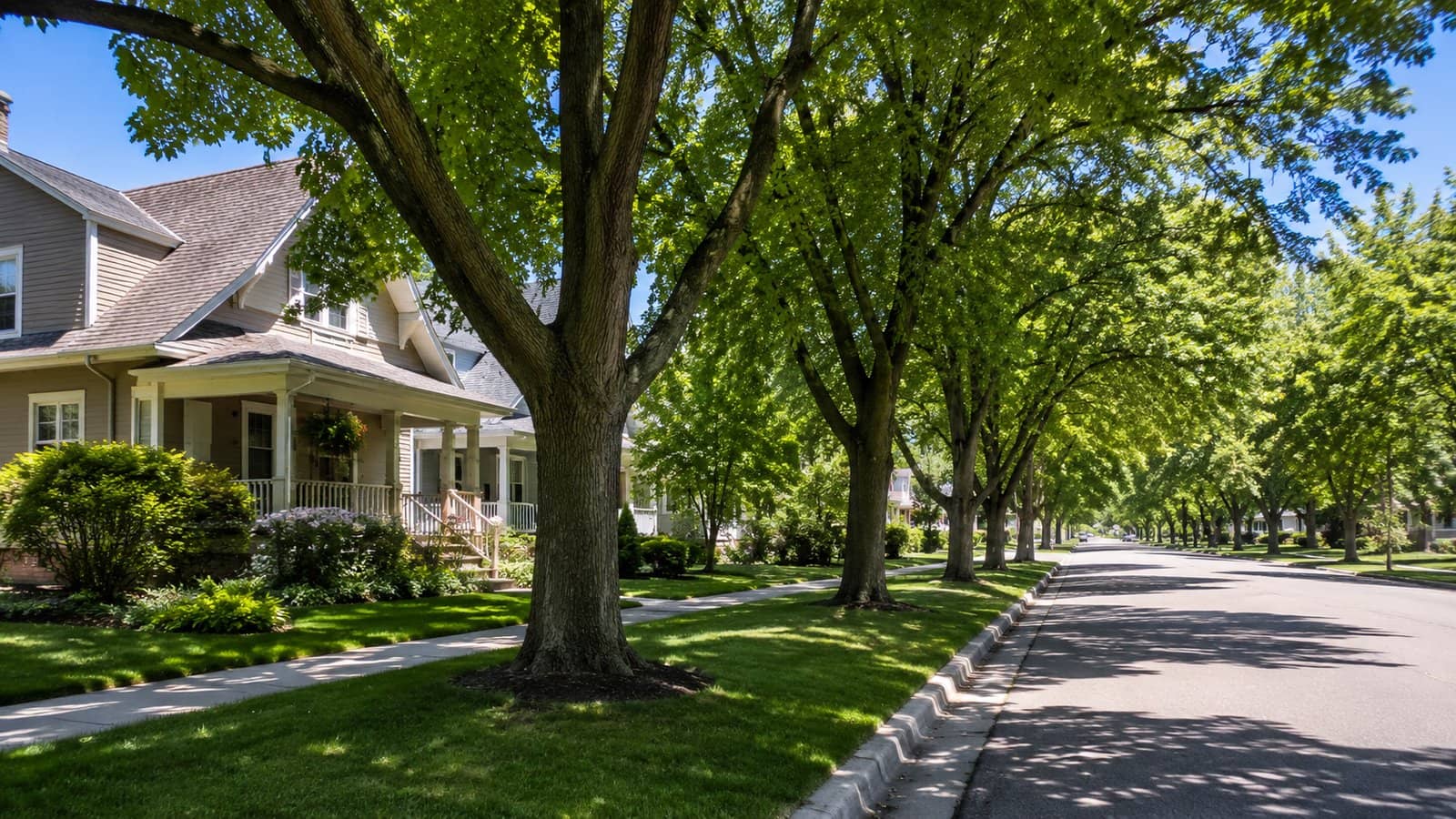
Boulevard trees are different
In Eau Claire, boulevard trees are owned and maintained by the City of Eau Claire. The boulevard generally refers to the strip between the sidewalk and the curb, and in some cases the right-of-way area can extend beyond the sidewalk. The City’s Forestry Division maintains public trees, including pruning, removals, stump grinding, hazard assessment, storm-related problems, and insect or disease concerns. (Source: City of Eau Claire Boulevard Tree Information.)
That means you should not remove, prune, treat, or grind a boulevard tree as if it were a private backyard tree. The city asks residents to contact the Forestry Division for boulevard tree work. Property owners may be able to hire a licensed and insured contractor for boulevard tree work, but only with an approved permit from the City Forester before work begins.
When to call the city first
Call Eau Claire Forestry before work begins if the tree is between the sidewalk and street, appears to be in the public right-of-way, was planted as part of a city project, is affecting a public sidewalk, or may be a city-managed ash tree. Also call if a storm-damaged tree is touching public infrastructure or blocking a street or sidewalk.
If you are outside Eau Claire city limits, rules may differ. Boyd, Altoona, Lake Hallie, Chippewa Falls, and rural townships can each handle public trees, right-of-way work, and brush disposal differently. County, township, subdivision, or HOA rules may also apply.
Private tree removal still needs a safe plan
Even when no city tree permit is needed for a private-yard tree, removal should still be planned carefully. Check for overhead wires, underground utilities, fences, septic areas, buildings, and neighboring property. If the tree is near a lot line, talk with the neighbor before work begins so there is no confusion about ownership or cleanup.
For dead, declining, or storm-damaged trees, waiting too long can make the job more dangerous. A brittle tree may not be safe to climb, and a cracked tree can shift while being cut. That is where professional tree removal or tree risk assessment is useful.
What to have ready when asking about a tree
Whether you call the city or a tree service, it helps to know the address, the tree’s location on the property, whether there is a sidewalk or curb nearby, the species if you know it, and why removal is being considered. Photos from a safe distance can help, especially for storm damage or suspected hazard trees.
This article is general information, not legal advice. If a tree is tied to a property dispute, development requirement, easement, or city order, confirm the current rule with the appropriate office before scheduling work.
Talk to a local arborist
Need help determining whether a tree is private, hazardous, or ready for removal? Contact Wellner Arboriculture or call (715) 313-0550.