Winter damage often starts before winter
By the time a tree shows winter injury in spring, the damage may have started months earlier. Dry fall weather, compacted soil, poor mulching, late-season construction, and existing dead limbs can all make a tree less prepared for cold, snow, and wind.
A good winter tree-care routine is simple: water when fall is dry, protect young trunks, reduce salt exposure, keep mulch correct, and deal with obvious hazards before heavy snow loads them up.
Water before the ground freezes
Evergreens and newly planted trees are especially vulnerable to winter drying. Needles and evergreen leaves continue to lose moisture during winter, but frozen soil limits replacement water from the roots. If late summer and fall are dry, water young trees and evergreens deeply until the ground begins to freeze.
Do not keep the soil soggy. The goal is a moist root zone going into winter, not standing water. A slow soak every week or two during a dry fall is usually more helpful than frequent light watering.
Mulch helps, but keep it off the trunk
A 2- to 3-inch layer of wood-chip mulch over the root zone helps moderate soil temperature, protect roots from freeze-thaw swings, and hold moisture. This is especially useful for new plantings and trees growing in lawn.
Keep mulch several inches away from the trunk and leave the root flare visible. Volcano mulch traps moisture against the bark, encourages rot, and can create stem-girdling roots later. A wide, flat mulch ring is better than a tall pile.
Snow and ice: brush only what releases easily
Heavy wet snow can bend branches, and ice can add tremendous weight. UW-Madison Extension advises brushing snow away only when it comes off easily. If snow is frozen in place or branches are coated with ice, leave it alone and let natural melting do the work. Shaking or beating frozen limbs can crack wood and create damage you may not see until the next growing season. (Source: UW-Madison Extension.)
If a large limb breaks or hangs over a driveway, roof, or walkway, treat it as a safety issue. Winter storm damage can involve loaded limbs under tension, and those cuts can be unpredictable.
Salt damage is a spring problem with a winter cause
Road salt and deicing products can damage roots, burn evergreen foliage, and cause browning or dieback along driveways and streets. Plow first, use salt sparingly, and consider sand for traction where practical. Products based on potassium chloride are generally less harmful to plants than sodium chloride, though every deicer should still be used thoughtfully.
If you have sensitive trees near a road or driveway, snow fencing or a burlap screen can reduce spray. Avoid piling salty snow directly over the root zone of young or valuable trees.
Protect young trunks from sunscald and animals
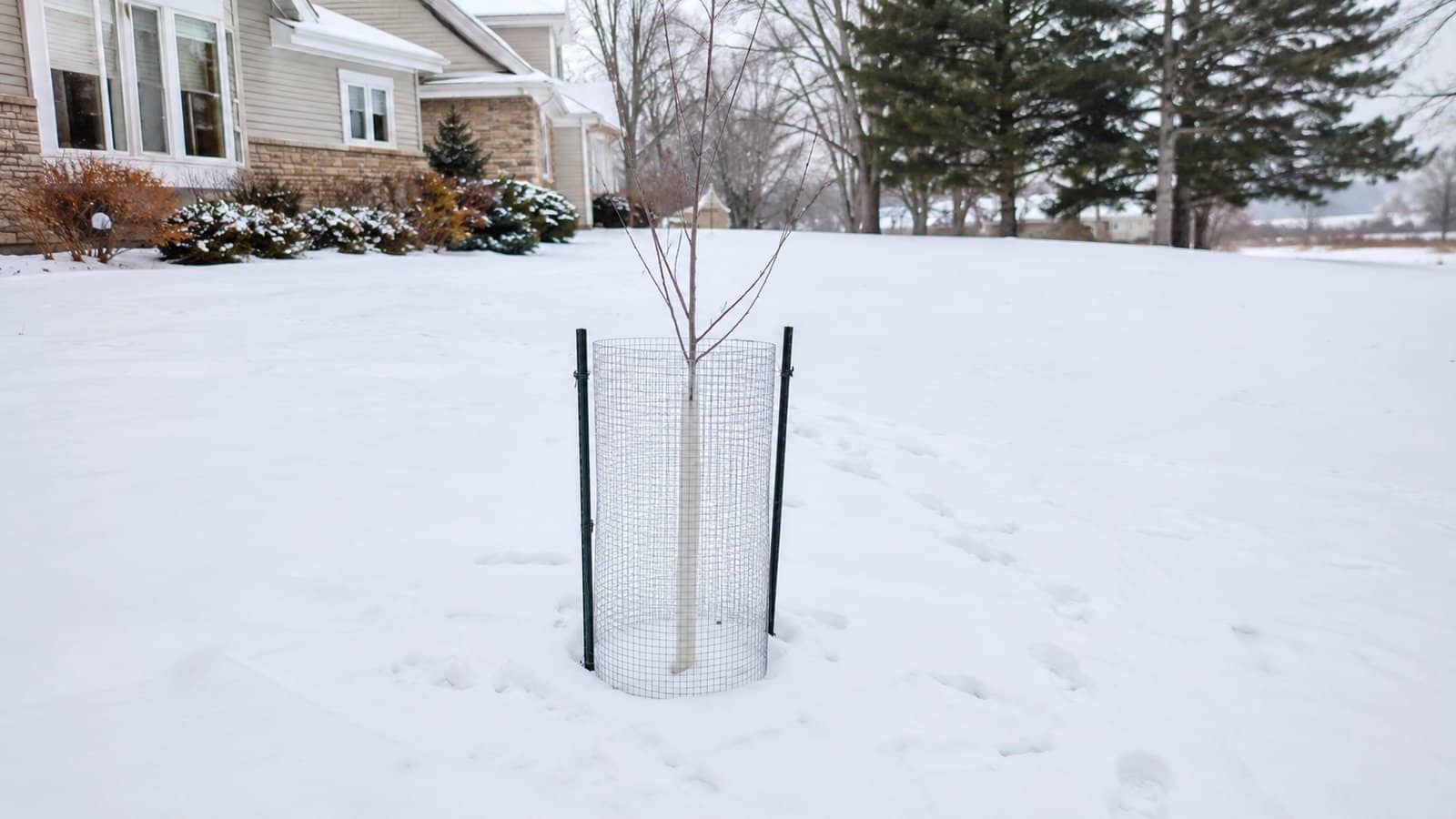
Thin-barked young trees, including maples and many ornamentals, can split from sunscald when winter sun warms the bark during the day and temperatures plunge at night. A light-colored commercial tree wrap or trunk guard can help for the first few winters. Remove wraps in spring so they do not trap moisture or insects.
Rabbits and voles can also girdle young trees by chewing bark near the ground, especially when snow gives them a platform. Hardware cloth cylinders work well when they are tall enough to stay above expected snow and wide enough not to rub the trunk.
Prune obvious hazards before snow loads them
Late fall and winter are good times to remove dead, broken, or crossing branches on many trees. For oaks, dormant-season pruning is also the safer timing for reducing oak wilt risk. If a tree already has a cracked union, hanging limb, or heavy branch over a structure, it is better to address it before the next ice storm tests it.
Talk to a local arborist
Need help getting a tree ready for winter or cleaning up after a storm? Contact Wellner Arboriculture or call (715) 313-0550.