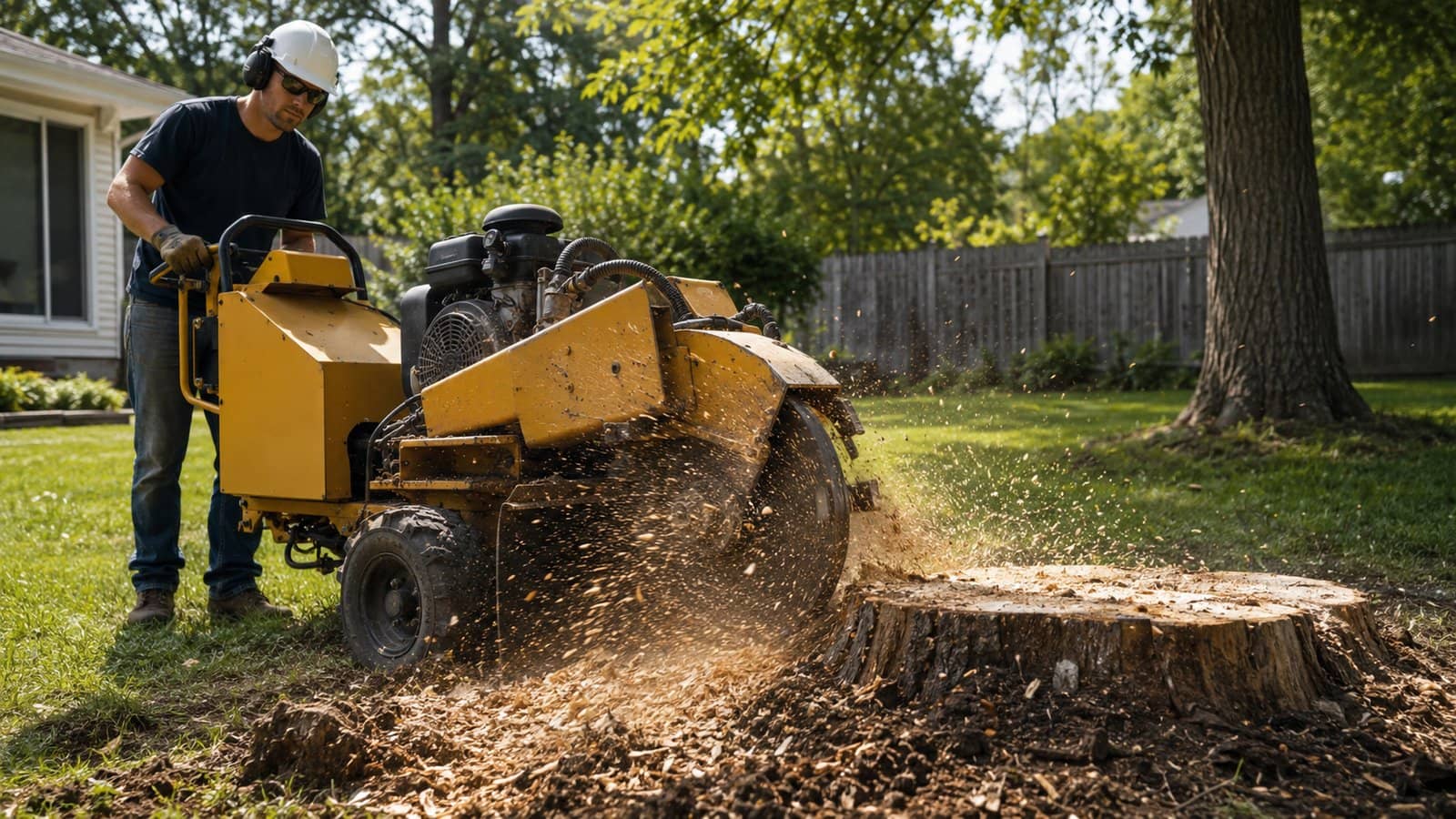
Stump grinding removes what you see
Stump grinding uses a machine with a cutting wheel to chip the stump down below the surface. The visible stump is gone, the area can be leveled, and the remaining roots decay naturally underground.
For most residential yards, this is the practical choice. It is faster, less disruptive, and usually more affordable than digging out the entire stump and major root system. It also avoids turning a simple stump project into a large excavation.
Full stump removal means digging out the root mass
Full stump removal is more literal. The stump and major roots are dug or pulled out of the ground. That can be useful when the roots are directly in the way of a foundation, driveway, utility project, retaining wall, or other construction work.
The tradeoff is disturbance. Full removal leaves a larger hole, tears up more soil, and often requires heavier equipment. It is not usually necessary just to make a yard look better or mow safely.
How deep does grinding go?
Grinding depth depends on the stump, site, machine access, and future plans for the area. Many yard stumps are ground several inches below grade, enough to cover the area with soil and seed or mulch. If you plan to replant directly in the same spot, mention that during the estimate because the depth and cleanup plan may need to be different.
Large surface roots can often be chased and ground where they create mowing or tripping problems, but not every root needs to disappear. Roots left underground break down over time.
What happens to the chips?
Grinding creates a mix of wood chips and soil. Some homeowners keep the chips to fill the hole or use as rough mulch in natural areas. Others prefer the grindings removed and replaced with clean topsoil. Either approach can work, but fresh stump chips can settle as they decompose.
If the area will become lawn, expect to add soil, tamp lightly, seed, and possibly topdress again later as the old roots decay and the ground settles.
Can you plant where a stump was ground?
You can often plant near a ground stump, but planting directly in the same spot can be tricky. Remaining roots, chips, nitrogen tie-up from decomposing wood, and settling can make establishment harder. A new tree usually does better slightly offset from the old stump location.
If the old tree died from a disease or site problem, replacement planning matters even more. Do not put the same species back into the same failed conditions without understanding why the first tree declined.
Utilities and hidden metal matter
Before grinding, underground utilities should be marked when appropriate. Irrigation lines, invisible fence wire, landscape lighting, metal stakes, rocks, old fence hardware, and buried concrete can all create problems. Clear the area as much as possible and tell the crew about anything you know is hidden nearby.
Which option is right for you?
Choose stump grinding if you want the visible stump gone, easier mowing, fewer trip hazards, and a cleaner-looking yard. Choose full removal only when the root system itself conflicts with construction or a specific landscape project.
Talk to a local arborist
Need a stump gone after tree removal? Wellner Arboriculture can help you choose the cleanest option for the site. Contact us or call (715) 313-0550.