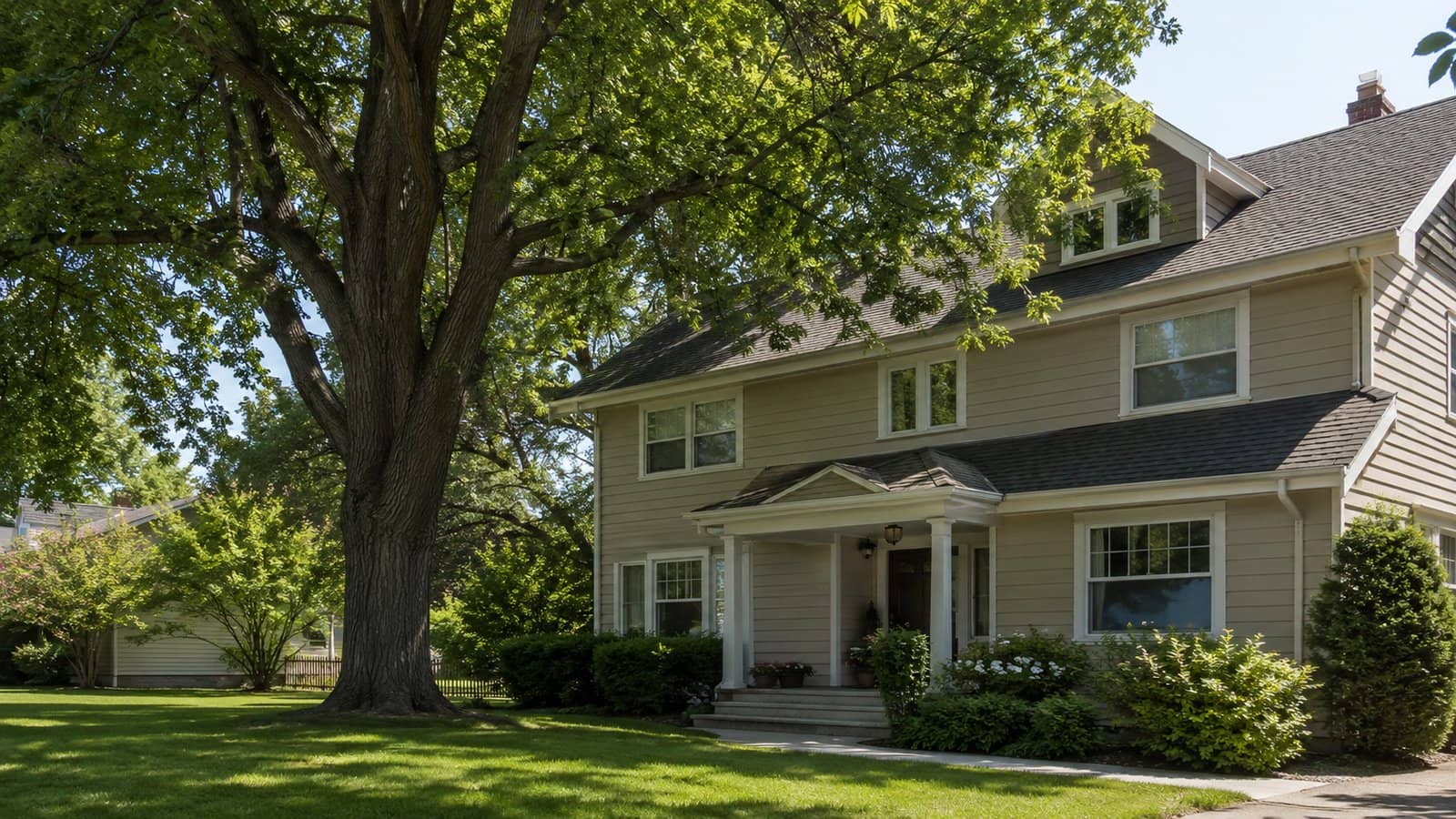
Plant for the mature tree
The best spacing rule is to think in mature size, not nursery size. A 7-foot tree in a container can eventually become a 50-foot shade tree with a wide crown and a root system that reaches well beyond the trunk. Good placement protects the house and gives the tree room to grow naturally.
There is no single distance that fits every species, house, and soil. Mature height, canopy spread, root habits, roofline, foundation type, utilities, slope, and pruning expectations all matter.
General spacing by tree size
Small ornamental trees, such as serviceberry, redbud, Japanese tree lilac, hawthorn, or many crabapples, can often be planted about 8 to 15 feet from a house, depending on mature spread and roof clearance.
Medium trees, such as ironwood, smaller maples, hornbeam, or ornamental pear alternatives chosen carefully, usually need about 15 to 25 feet of room.
Large shade trees, such as oak, sugar maple, hackberry, linden, and Kentucky coffeetree, should be farther out, often 30 feet or more from the house when space allows. More room is better if the tree will develop a broad crown or if the house has a tall roofline.
Look up before you dig
Overhead wires are one of the most common planting mistakes. A tree planted under a power line will be pruned repeatedly by utility crews, often in ways that are necessary for clearance but hard on the tree’s form. Use small trees under wires or choose a different planting spot.
Also think about gutters, shingles, chimneys, solar panels, and siding. Branches touching the roof can scrape shingles, hold moisture, give animals access, and drop leaves into gutters. A little planning now prevents years of clearance pruning later.
Look down too
Before planting, call for utility markings and consider sewer laterals, water lines, septic fields, drain tile, irrigation, and buried cables. Roots grow where soil conditions support them, and they are especially attracted to moisture from leaking pipes or damaged joints.
Fast-growing, water-seeking species such as willow, poplar, and silver maple deserve extra distance from sewer lines, foundations, sidewalks, and driveways. They are not always bad trees, but they need the right place.
Do roots break foundations?
Roots usually do not break a sound modern foundation by brute force. Problems are more often related to roots exploiting existing cracks, soil moisture changes, or trees being planted too close to structures in heavy clay soils. Good spacing and species choice reduce those risks.
If the tree is already close to the house, do not cut major roots without advice. Removing large roots can destabilize the tree or create decay pathways. Sometimes pruning the canopy, monitoring, or removal is safer than root cutting.
Place shade where it helps
A well-placed shade tree can cool a home, improve comfort, and add value. West and southwest sides often benefit from summer afternoon shade, but the tree still needs room. Planting a large tree too close for faster shade usually creates maintenance issues later.
Wellner Arboriculture can help with tree planting decisions that account for mature size, local hardiness, soil, and the actual layout of your property.
Talk to a local arborist
Not sure where a new tree should go? Ask us before you plant or call (715) 313-0550.