Pipe Repair & Repiping | Metro Atlanta
Repiping in Atlanta and the surrounding suburbs
A lot of homes around Metro Atlanta were built or plumbed between the late 1970s and the mid 1990s. That timing matters. Two pipe materials from that era, polybutylene and galvanized steel, are now well past their prime and tend to fail in ways that catch homeowners off guard. A&G Plumbing & Drain has been repiping houses in this area since 2006, and we will tell you straight whether you need a full repipe, a partial one, or just a targeted repair.
If you own a home in Sandy Springs, Smyrna, Marietta, or East Cobb, there is a real chance your supply lines are one of these older materials. We handle the whole job, from the first leak you spot to the final wall patch, and we work to keep the mess and the wall cutting to a minimum.
Polybutylene and galvanized pipe: why older Metro Atlanta homes need attention
Polybutylene is a gray (sometimes white or black) plastic supply pipe used widely in new construction from about 1978 through 1995. Smyrna and Marietta saw heavy residential growth through the 1980s, which is exactly when this pipe was going into the most homes. The problem is that polybutylene breaks down from the inside out. Chlorine and other oxidants in city water slowly degrade the pipe wall, and you get almost no warning before it fails. A polybutylene line headed for trouble looks the same as a healthy one right up until a fitting bursts or a slow leak shows up behind drywall. Many insurers now treat these pipes as a liability, and some will not write a policy on a home that still has them. We cover the details in our guide to polybutylene pipes in Atlanta.
Galvanized steel is the other common culprit, found in homes built before the 1960s and in some later remodels. It carries a zinc coating that wears off over time, and once the bare steel is exposed it rusts from the inside. Galvanized pipe usually lasts 40 to 50 years, though hard water and local conditions can cut that short. As rust narrows the pipe, you get low pressure, discolored water, and eventually leaks.
Signs you may need a repipe
- Discolored, rusty, or metallic-tasting water, especially first thing in the morning
- Water pressure that has dropped across the house, not just at one fixture
- Gray plastic or rusty steel supply lines visible in the basement, crawlspace, or at the water heater
- Repeat pinhole leaks or fitting failures in the same system
- A home built or plumbed between 1978 and 1995 with original supply lines
- An insurer or home inspector that flagged polybutylene
Not every leak means a repipe. Sometimes the right call is a spot repair, and our leak detection and repair team can pinpoint a hidden leak before you spend money you do not need to. We will give you the honest answer either way.
PEX vs. copper: which repipe material is right for you
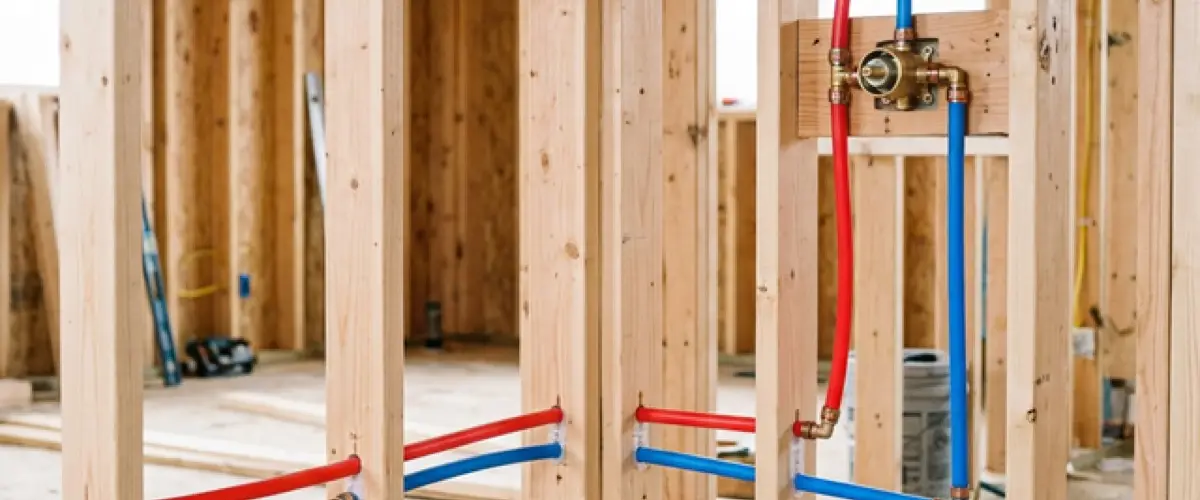
We repipe with two materials, and both are solid choices. PEX is a flexible plastic supply line. It needs fewer fittings, snakes through walls with less cutting, and costs less to install, which is why most of our repipes use it. Copper is the traditional choice. It is rigid, joined with soldered fittings, and tends to cost more in both material and labor, but it has a long track record and a lot of homeowners prefer it. We will walk you through the trade-offs for your specific house and let you pick.
Our minimally-invasive repipe process
A full repipe sounds scary, but a clean job does not mean tearing your house apart. Here is how we approach it:
- We map your existing plumbing and plan the shortest, smartest routes for new lines.
- We open small, targeted access points instead of opening whole walls.
- We run the new PEX or copper, connect every fixture, and pressure test the system.
- We get your water back on, often the same day on smaller homes.
- We patch the access points and clean up after ourselves.
Honest cost ranges
Most whole-house repipes on a typical three-bedroom home land somewhere between $4,000 and $15,000. Where you fall depends on the size of the home, how many bathrooms and fixtures you have, whether you choose PEX or copper, and how easy the walls are to access. Labor is the biggest piece of the bill. We give a clear written quote before any work starts, so the number you hear is the number you pay.
Serving Sandy Springs, Smyrna, Marietta, and East Cobb
Older housing stock is why repipe demand stays high across our service area. We work throughout Sandy Springs, Smyrna, Marietta, and East Cobb, where 1980s and early 1990s neighborhoods commonly have original polybutylene supply lines still in the walls. Call (770) 627-4421 for fast scheduling, with same-day service when available during business hours.
Frequently asked questions
How do I know if I have polybutylene pipes?
Look for gray (sometimes white or black) flexible plastic supply lines, often visible at the water heater, in the basement, or in the crawlspace. Homes built from 1978 to 1995 are the most likely to have them. If you are not sure, we can come out and identify the material for you.
Do I really need to replace polybutylene if it is not leaking yet?
Polybutylene degrades from the inside, so it can look fine right up until it fails with no warning. Many insurers also treat it as a risk and may not cover a home that still has it. Replacing it before it bursts is almost always cheaper than dealing with water damage after.
What is the difference between PEX and copper for a repipe?
PEX is flexible, installs with fewer fittings and less wall cutting, and usually costs less. Copper is rigid, soldered at the joints, costs more, and has a long proven track record. Both are good choices, and we help you decide based on your home and budget.
How long does a whole-house repipe take?
It depends on the size of the home and the number of fixtures. Many repipes are completed in a single day, and larger homes may take two to three days. We aim to keep your water off for as little time as possible.
How much does it cost to repipe a house in the Atlanta area?
Most three-bedroom homes fall between $4,000 and $15,000. Home size, fixture count, material choice, and wall access all move the number. We provide a written quote up front so there are no surprises.
Will repiping tear up my walls?
We use a minimally-invasive approach with small, targeted access points rather than opening entire walls. We patch those access points and clean up when the job is done.